




Personal Area
Personal Area
Light, medium, and dark roast: the ultimate flavor guide
Roast level is the single biggest factor in how a coffee tastes, more than origin, more than processing method. Two bags of the exact same green coffee, roasted to different degrees, can taste like two entirely different products: one bright and floral, the other deep and chocolatey. Neither is a better coffee. They're different expressions of the same raw material, and knowing what separates them helps you actually choose based on what you want in the cup, not just a label on a bag.
This guide covers what roasting does chemically, what defines each roast level, how to match a roast to your brewing method, and clears up one of the most persistent myths in coffee: that dark roasts pack more caffeine.
At a glance
| Light Roast | Medium Roast | Dark Roast | |
|---|---|---|---|
| Bean color | Light brown, dry surface | Medium brown, little to no oil sheen | Dark brown to near-black, visible oil |
| Roast endpoint | Ends at or shortly after first crack | Ends between first and second crack | Continues into or past second crack |
| Acidity | Highest | Moderate | Lowest |
| Body | Lighter, tea-like | Balanced, full | Heaviest, syrupy |
| Dominant notes | Fruit, floral, citrus | Caramel, nuts, milk chocolate | Dark chocolate, toasted, smoky, spice |
| Caffeine (measured by weight) | Roughly equal to other roasts | Roughly equal to other roasts | Roughly equal, very slightly less |
| Best suited to | Pour-over, drip, AeroPress | Drip, moka pot, espresso | Espresso, moka pot, milk-based drinks |
The roasting process explained
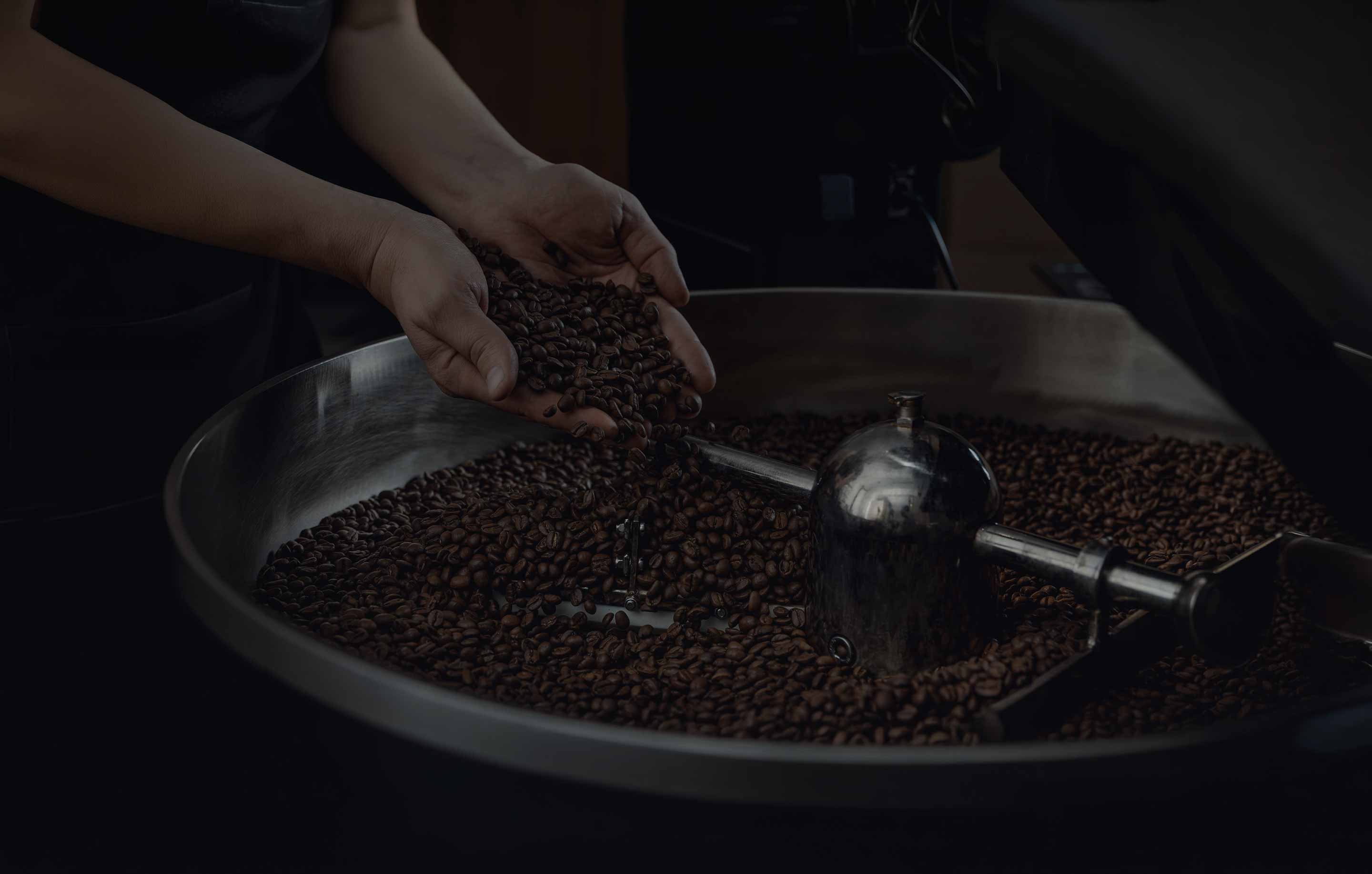
Green coffee starts out dense, grassy-smelling, and essentially undrinkable. What turns it into the aromatic product you brew is a controlled sequence of chemical reactions driven by heat, and the point at which a roaster stops that sequence is what determines the roast level.
Drying (up to roughly 320°F / 160°C). Green coffee holds around 10 to 12% moisture. Before any real flavor development can happen, that moisture has to evaporate. This phase doesn't produce much aroma on its own, but how evenly it happens sets up everything that follows.
The Maillard reaction and caramelization (roughly 320–400°F / 160–204°C). Once the bean is mostly dry, amino acids and sugars begin reacting under heat in what's known as the Maillard reaction, the same chemistry responsible for browning bread crust or seared meat. This is where the majority of coffee's aromatic complexity is created: hundreds of new compounds form, contributing everything from bready and nutty notes to fruit-like esters. Caramelization, a related but separate process involving only sugars, adds sweetness and deeper color alongside it.
First crack (roughly 385–400°F / 196–204°C). Built-up steam and CO2 inside the bean cause an audible crack, similar to popcorn popping. This is the earliest point at which coffee is technically roasted enough to brew, and it marks the boundary where light roasts typically stop.
Development time and second crack. After first crack, roasters continue for a period called development time, generally the last 15 to 25% of total roast time, which shapes sweetness and acidity balance. Medium roasts extend somewhat past first crack. If roasting continues further, the beans reach second crack (roughly 435–450°F / 224–232°C), a second, quieter cracking sound caused by the bean's cell structure breaking down further. Dark roasts are pulled at or after this point.
The key thing this process explains is why acidity drops and body increases as roasts get darker: acids break down with continued heat exposure, while oils are driven to the bean's surface and sugars caramelize further, building a heavier, more bittersweet character.
Light roast: bright, fruity, and complex
Light roasts are pulled at or shortly after first crack, before much of the sugar caramelization and structural breakdown of later stages occurs. The result is a coffee that preserves more of the origin's natural characteristics: higher acidity (perceived as brightness, not sourness, when well executed), floral and fruit-forward aromatics, and a lighter body that can feel closer to tea than to what many people picture as "coffee."
Because so little of the bean's original character has been roasted away, light roasts tend to show more variation between origins and processing methods than darker roasts do; a washed Ethiopian and a natural-process Colombian will taste far more distinct from each other as light roasts than they would once both are roasted dark. This is part of why light roasts are the standard in specialty and single-origin coffee: the roast is meant to showcase the bean, not the roasting process itself.
Common tasting notes include citrus, stone fruit, berries, florals, and occasionally tea-like or honeyed sweetness. The tradeoff is that light roasts are less forgiving of inconsistent brewing; because there's more going on flavor-wise, under- or over-extraction shows up more obviously than it does in a darker, more uniformly bittersweet cup.
Medium roast: the balanced sweet spot
Medium roasts extend past first crack but stop before second crack, giving the beans more time for caramelization and body development while keeping much of the origin character from the earlier stages intact. This is the most common roast level on U.S. grocery shelves and café menus, largely because it balances acidity and body in a way that reads as approachable across a wide range of palates and brewing methods.
Typical flavor notes shift toward caramel, milk chocolate, toasted nuts, and a fuller body than a light roast, while still retaining some of the brighter, more origin-driven notes that dark roasting tends to mute. Medium roast is often the easiest entry point for people exploring roast levels for the first time, since it doesn't lean hard toward either the pronounced acidity of light roast or the heavier, smokier character of dark roast.
Dark roast: bold, chocolatey, and classic
Dark roasts are taken into or past second crack, where the bean's structure breaks down further, oils migrate to the surface (giving dark roast beans their characteristic sheen), and acids continue to degrade. The result is a coffee with low acidity, a heavier and often syrupy body, and flavor notes dominated by dark chocolate, toasted or smoky character, and sometimes a bittersweet, spice-like edge.
This is the profile most associated with traditional Italian espresso culture and with classic American diner coffee alike, and it remains a popular, well-established style for good reason: the heavier body and lower acidity hold up particularly well in milk-based drinks, where a lighter, more delicate roast can get lost. Because origin-specific nuance is largely roasted away by this stage, dark roast blends tend to prioritize consistency and body over highlighting a single farm or region, which is also why dark roasting has historically been used to smooth out variability across large batches of beans.
The caffeine myth: which roast has more?
This is one of the most persistent misconceptions in coffee, and the honest answer is more nuanced than a simple "light has more" or "dark has more."
Caffeine is chemically stable at roasting temperatures. It doesn't meaningfully break down or "burn off" during roasting, whether light or dark. Roughly the same amount of caffeine that was in the green bean is still there after roasting, regardless of roast level.
What changes is the bean's mass and density, not its caffeine. Longer roasting drives out more moisture and causes the bean to expand, which means dark roast beans are larger and lighter than light roast beans of the same origin. This has a real, measurable effect, but only depending on how you measure your coffee:.
- By weight (using a scale): caffeine content is essentially the same across roast levels, with any difference typically falling within a few percent. This is the accurate, controlled way to compare.
- By volume (using a scoop or tablespoon): light roast will generally yield slightly more caffeine, because light roast beans are denser, so a given scoop contains more actual coffee mass than the same scoop of larger, airier dark roast beans.
In short: the popular idea that dark roast is "stronger" in caffeine because it tastes bolder is a myth, flavor intensity and caffeine content aren't linked. If anything, measuring by volume tips very slightly in light roast's favor, the opposite of the common assumption. If consistent caffeine intake matters to you, weighing your dose rather than scooping it is the more reliable approach regardless of which roast you drink.
How to choose your roast based on your brewer
- Pour-over and drip: Light to medium roasts are generally the better fit. These methods are well suited to highlighting acidity and nuanced, origin-specific flavor, which is exactly what light roasts preserve. A light roast pulled through a slow, controlled pour-over method can show detail that gets lost in faster brewing.
- French press: Medium to medium-dark roasts tend to perform well here, since the immersion method extracts a fuller body regardless of roast, and a slightly heavier bean complements that.
- Moka pot: Medium to dark roasts are the traditional pairing. The moka pot's higher pressure and shorter contact time suit a bean with more developed body and lower acidity.
- Espresso: Medium to dark roasts are the classic choice, particularly for milk-based drinks, since a fuller-bodied, lower-acid espresso holds its character against steamed milk far better than a delicate light roast does. That said, specialty espresso has increasingly embraced lighter roasts for straight shots, where the goal is to highlight acidity and origin character rather than body; if you're pulling shots to drink black, a lighter espresso roast is a legitimate and increasingly common choice.
- Cold brew: Medium to dark roasts are generally preferred, since cold brewing's long steep time already softens acidity naturally, and a bolder roast holds up better against dilution with ice or milk.
There's no rule that can't be broken here; plenty of people happily pull espresso from light roasts or brew pour-over with dark roast beans. These pairings reflect what tends to produce the most balanced result with each method, not a hard requirement.
Common misconceptions about roast level
- "Dark roast means lower quality beans." Not true. Roasters choose dark roast profiles deliberately for the flavor and body it produces, and high-quality beans are roasted dark just as often as they're roasted light. Roast level is a style choice, not a quality signal.
- "Light roast is always more acidic in a bad way." Acidity in coffee, when well balanced, reads as brightness and liveliness rather than sourness. Sourness is more often a sign of under-extraction during brewing than a property of the roast itself.
- "Roast level tells you how fresh the coffee is." It doesn't. Freshness is about the roast date, not the roast level. A roast date within the last two to four weeks matters far more to flavor than whether the beans are light or dark.
- "Decaf coffee is always roasted dark to hide flavor flaws." This used to be more common but isn't a rule; decaf is available across all roast levels today, and the decaffeination process itself, not the roast, is what most affects a decaf's baseline flavor.
FAQ
Which roast is strongest?
It depends on what "strong" means. If you mean flavor intensity and body, dark roast is generally the boldest. If you mean caffeine content, the differences between roasts are minor and roughly comparable when measured by weight, so no roast level is meaningfully "stronger" in that sense.
Is dark roast more bitter because it's burnt?
Not necessarily. A well-executed dark roast develops bittersweet, toasted, and chocolatey notes through controlled caramelization and the Maillard reaction, not through burning. Genuinely burnt or scorched coffee is a roasting defect, not a defining trait of dark roast as a style.
Can I use the same beans for espresso and drip coffee?
Yes, roast level matters more than the specific bag for most home setups. A medium roast, in particular, tends to perform reasonably well across multiple brew methods, which is part of why it's the most common roast on the market.
Does roast level affect how long beans stay fresh?
Slightly. Dark roast beans are more porous and release CO2 (and absorb oxygen) somewhat faster than light roast beans, so they can go stale a touch quicker once opened. In both cases, an airtight container away from light and heat, and using beans within a few weeks of the roast date, matters more than roast level itself.
Why do light roasts taste sour to me sometimes?
This is more often an extraction issue than a roast-level trait. If a light roast tastes sharp or sour rather than pleasantly bright, try a finer grind or a longer extraction time; both increase how much of the coffee's sweetness and body make it into the cup, balancing out the acidity.