












Personal Area
Personal Area
Ristretto vs. Lungo: Espresso brew ratios explained
Ristretto and lungo often get treated as simple variations: less water, more water. In practice, the difference isn't just dilution. Changing the brew ratio changes which flavor compounds actually make it into the cup, since coffee doesn't extract all at once or in a fixed order. Sweetness and acidity come out first, body and structure follow, and bitterness and heavier, drier compounds come out last. Where you stop the shot determines how much of that later stage ends up in your cup.
This guide breaks down the real technical differences between a ristretto and a lungo, what each ratio does to the flavor, and how to pull both accurately at home, on manual espresso machines and capsule systems alike.
At a glance
|
Ristretto |
Standard Espresso |
Lungo |
Meaning (Italian) |
"Restricted" |
Standard reference shot |
"Long" |
Typical ratio |
1:1 to 1:1.5 |
1:2 |
1:3 to 1:4 |
Yield (from 18g dose) |
~18–27g / 0.6–0.9 oz |
~36g / 1.2 oz |
~54–72g / 1.8–2.4 oz |
Extraction time |
~15–25 seconds |
~25–30 seconds |
~35–50 seconds |
Body |
Dense, syrupy |
Balanced |
Lighter, more diluted |
Flavor tendency |
Concentrated, sweeter, more acidity |
Balanced sweetness, body, and bitterness |
More bitter and astringent if not adjusted |
The standard Espresso: a quick refresher
Before comparing the variations, it helps to understand the baseline. A standard, or "normale," espresso shot uses roughly a 1:2 ratio of ground coffee to liquid yield: an 18g dose extracted to about 36g / 1.2 oz of espresso, typically over 25 to 30 seconds. This ratio is designed to extract a full range of flavor compounds in balance, enough sweetness and body without tipping into excessive bitterness.
Ristretto and lungo aren't separate drinks so much as deliberate departures from this reference point, made by changing how much water passes through the same dose of coffee.
What is a Ristretto?
A ristretto ("restricted" in Italian) is a shot pulled to a lower yield than a standard espresso, typically a 1:1 to 1:1.5 ratio, so an 18g dose might yield only 18 to 27g of liquid. Because extraction is stopped earlier, before more of the later-stage, heavier compounds have a chance to dissolve, a ristretto tends to taste sweeter, more acidic, and less bitter than a standard shot, with a noticeably denser, syrupier body.
It's worth correcting a common oversimplification here: a ristretto isn't "zero bitterness." It simply extracts a smaller proportion of the bitter, drying compounds that come out later in the shot, which makes bitterness far less prominent relative to sweetness and acidity, not eliminated outright.
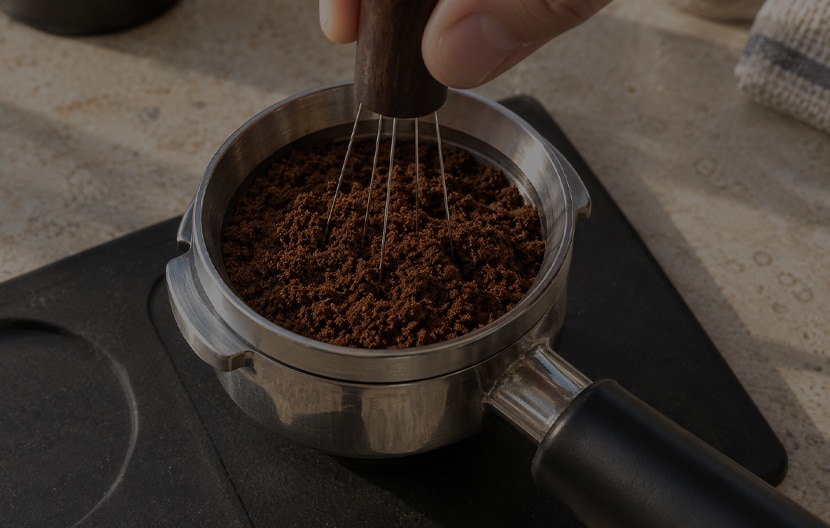
A technical point that trips up a lot of home baristas: simply stopping a normal shot early doesn't reliably make a good ristretto. If you use the same grind size as a standard espresso and just cut the shot short, you risk under-extraction, since less time and water have passed through the same amount of ground coffee, potentially leaving the shot sour or thin rather than concentrated and sweet. Many experienced baristas instead grind slightly finer for a ristretto, which slows the flow enough that the shorter shot still gets close to a full, balanced extraction time (closer to 20-25 seconds) despite the lower yield.
What Is a Lungo?
A lungo ("long" in Italian) is a shot pulled to a higher yield than a standard espresso, typically a 1:3 to 1:4 ratio, so the same 18g dose might yield 54 to 72g of liquid. Letting more water pass through the same dose extracts further into the coffee's flavor compounds, pulling out more of the bitter, drier notes that a standard shot leaves behind, along with a lighter, more diluted body.
There are two different ways to pull a lungo, and they don't produce the same result:
- Extending the extraction time on the same grind setting lets more hot water sit in contact with the same puck of coffee for longer. This is the simplest approach, but it risks over-extraction: pulling too far past a shot's natural balance point tends to introduce harsh, astringent bitterness rather than the more complex, still-balanced character a good lungo should have.
- Using a coarser grind allows more water to pass through at a similar rate, reaching a higher yield without dramatically extending contact time. This is generally the more reliable approach for a balanced lungo, since it avoids over-steeping the same grounds for too long.
Done well, a lungo shows more of the coffee's fuller flavor range, including notes a standard shot doesn't have time to draw out, without crossing into unpleasant bitterness. Done poorly (usually by just letting a normal grind run long), it tends toward the flat, over-extracted bitterness lungo is sometimes unfairly known for. A lungo also shouldn't be confused with an Americano, which is a standard espresso shot with hot water added afterward rather than more water passed through the grounds during extraction; the two look similar but are built completely differently.
Yield, Time, and Taste: The Technical Differences
Metric |
Ristretto |
Standard Espresso |
Lungo |
Ratio (coffee : liquid) |
1:1 to 1:1.5 |
1:2 |
1:3 to 1:4 |
Grind adjustment (vs. standard) |
Slightly finer |
Baseline |
Coarser |
Primary flavor compounds extracted |
Sweetness, acidity, aromatic oils |
Balanced across sweetness, body, and some bitterness |
Full range, including later, more bitter and astringent compounds |
Risk if done incorrectly |
Under-extraction (sour, thin) if grind isn't adjusted |
Over- or under-extraction from dialing errors |
Over-extraction (harsh, astringent) if time is simply extended |
Typical serving context |
Straight, or as the base for a cortado or flat white |
Straight, or as the base for most milk drinks |
Straight in a larger cup, or as the base for an Americano-style long drink |
How to pull each shot at home
To prepare a ristretto coffee:
- Start from your standard espresso dial-in (grind, dose, and time that produce a balanced 1:2 shot).
- Grind slightly finer, in small increments, rather than simply stopping your normal shot early.
- Target a yield of roughly 1:1 to 1:1.5 (for an 18g dose, aim for 18 to 27g out), while keeping the extraction time close to your standard shot's range if possible.
- Taste for sourness. If the shot tastes thin or sharp rather than concentrated and sweet, grind finer still.
To prepare a lungo coffee:
- Start from your standard dial-in as the baseline.
- Adjust your grind coarser rather than simply letting the shot run longer at the same setting.
- Target a yield of roughly 1:3 to 1:4 (for an 18g dose, aim for 54 to 72g out).
- Taste for bitterness and astringency. If the shot tastes harsh or drying rather than fuller-bodied and complex, coarsen the grind further rather than cutting the shot shorter, which would just turn it back into something closer to a standard espresso.
In both cases, changing the grind rather than only the clock keeps the extraction time in a reasonable range for the amount of coffee used, which is the detail that separates a well-executed ristretto or lungo from a shot that's simply too short or too long.
Ristretto and Lungo with capsule machines
Adjusting ratio on a capsule machine works differently than on a manual espresso machine, since the grind and dose are fixed inside the capsule and can't be changed at home. Instead, the ratio is controlled by the machine's programmed water volume for a given cup size setting, or by manually stopping the extraction at your preferred yield if the machine allows it.
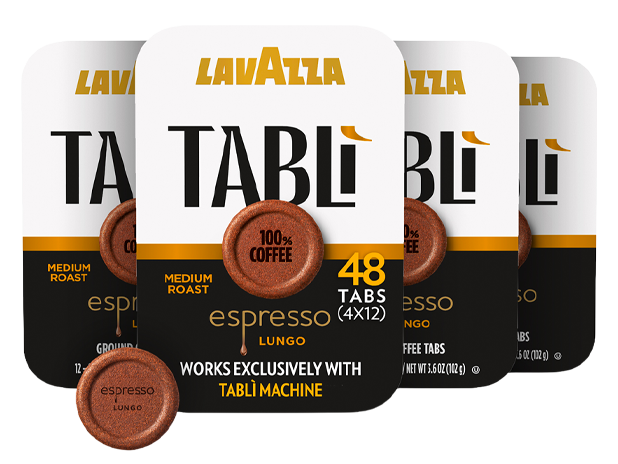
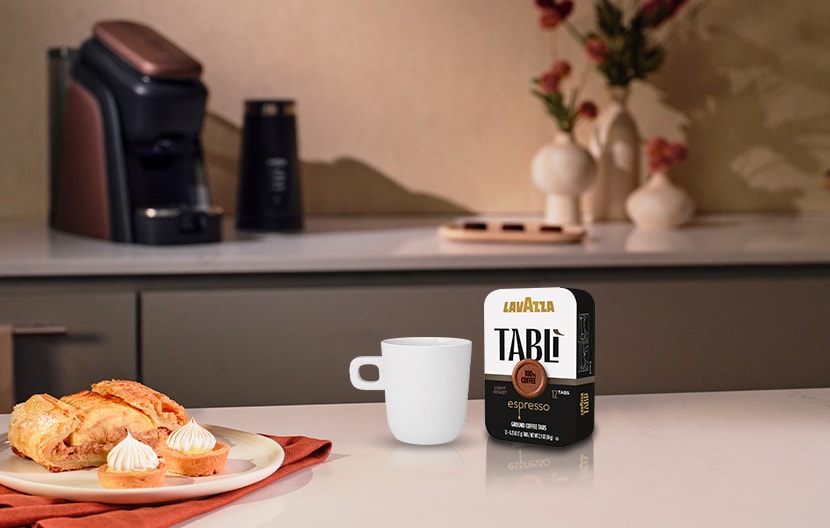
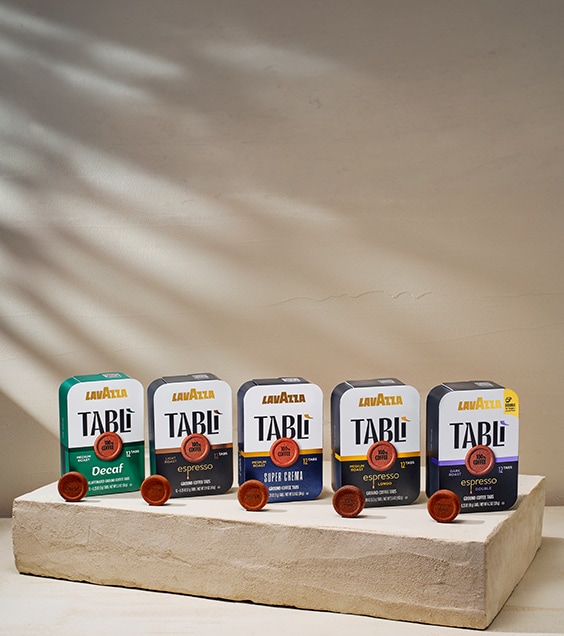
Rather than relying only on manual adjustment, Lavazza offers capsules purpose-built around specific ratios across its U.S. single-serve systems. In the Tablì range, Espresso Lungo Tabs are formulated for a longer, larger-cup extraction rather than a standard shot stretched further than it was designed for. In the Expert Capsules range (for Classy machines), Espresso Ristretto capsules use an extra-dark roast blend developed specifically to hold up to a short, concentrated extraction, with tasting notes (caramel, tobacco, and a smoky finish) built around that shorter contact time. Choosing a capsule matched to the ratio you want is generally more reliable on these systems than trying to manually shorten or extend a capsule designed for a standard shot, since the grind inside wasn't adjusted to match.

Common mistakes
- Treating ristretto as "just a shorter timer." Without adjusting the grind, a shortened shot is often just under-extracted, not a true ristretto.
- Treating lungo as "just a longer timer." The same logic applies in reverse; extending time without adjusting grind risks pulling harsh, over-extracted flavor into the cup.
- Confusing lungo with an Americano. They look similar in the cup but are built differently: a lungo extracts more from the grounds directly, while an Americano dilutes a finished standard shot with separately added hot water.
- Expecting a ristretto to taste identical to espresso, just smaller. It's a genuinely different flavor profile, more concentrated and sweeter, not a scaled-down version of the same shot.
FAQ
Can I make a lungo with capsules?
Yes. Most capsule machines let you select a larger cup size or water volume setting, which produces a longer extraction. For a more purpose-built result, blends developed specifically for a lungo ratio, are formulated to taste balanced at that longer extraction rather than just diluted. Lavazza offers the innovative Tablì system with its Espresso Lungo tabs, for a smooth and delicate lungo coffee.
Is ristretto stronger than a regular espresso?
In terms of concentration and body, yes, a ristretto uses less water for the same amount of coffee, so it's more concentrated. In terms of caffeine, the difference is minimal: caffeine extracts relatively early and efficiently, so a ristretto and a standard shot from the same dose contain roughly similar total caffeine, even though the ristretto is more concentrated by volume.
Which is better for milk drinks, ristretto or lungo?
Ristretto is generally the better base for milk-forward drinks like flat whites, since its concentrated character holds up against steamed milk better than a more diluted lungo would. A standard espresso is still the most common base for most milk drinks; lungo is less commonly used this way, since its lighter body tends to get lost once milk is added.
Can I turn a lungo into an Americano, or are they the same thing?
They're related but distinct. You can approximate an Americano by adding hot water to a standard espresso shot after extraction. A true lungo, by contrast, extracts more directly from the grounds rather than diluting a finished shot, which gives it a different flavor profile even at a similar final volume.
Does a darker roast work better for a ristretto or a lungo?
Both can work well across roast levels, but the more concentrated nature of a ristretto tends to pair well with bolder, darker roasts, since there's less water to soften intensity. A lungo can work well with either, though its longer extraction already pulls out more bitterness on its own, so a slightly lighter or medium roast can help keep the cup from tasting overly heavy.
What grind size should I use if I don't want to keep adjusting between shots?
If you regularly switch between ristretto, standard, and lungo, it's worth keeping notes on the grind setting for each rather than guessing each time, since the ideal setting shifts in small but meaningful increments between the three.
You may also like


Lavazza Capsules compatible with Nespresso* Original machines
Espresso Maestro Lungo
Intensity 5/13
$8.50