














Personal Area
Personal Area


Latte vs. Flat White vs. Macchiato: differences explained and how to prepare them
Walk into almost any American coffee shop and you will find three drinks that seem interchangeable. In practice, a latte, a flat white, and a macchiato are three distinct drinks, and the difference isn't decoration, it's ratio. How much milk goes in, how that milk is textured, and how it's poured change the entire experience of the espresso underneath.
This guide breaks down what actually separates these three drinks, where each one comes from, and how to make an accurate version of each at home, with plant-based milk alternatives included.
Latte, Flat white and Macchiato at a glance
| Macchiato | Latte | Flat White | |
|---|---|---|---|
| Espresso | 1–2 shots | 1–2 shots | 1 double or ristretto shot |
| Milk | A dollop of foam | 6–10 oz steamed milk + foam layer | 4–5 oz steamed milk, microfoam only |
| Milk Texture | Dense foam, minimal volume | Steamed with a distinct foam cap | Ultra-fine, glossy microfoam, no separate cap |
| Typical Size | 2–3 oz | 8–12 oz | 5–7 oz |
| Origin | Italy | Italy (globally adapted) | Australia / New Zealand (contested) |
| Flavor Profile | Espresso-forward, minimal dilution | Milk-forward, softened espresso | Balanced, espresso still prominent |
The espresso-to-milk ratio explained
Every milk-based espresso drink is built from the same two ingredients. What changes is the proportion, and that proportion is what actually defines the drink, not the cup it's served in or the name on the menu.
- Macchiato: roughly 2:1 espresso to milk. Milk appears only as a small amount of foam; the espresso is barely diluted.
- Latte: roughly 1:3 to 1:5 espresso to milk in most American cafés, though the traditional Italian home version, served in a smaller cup, is closer to 1:2. Milk dominates, and a foam cap sits on top of the steamed milk.
- Flat white: roughly 1:2 to 1:2.5 espresso to milk. This puts it squarely between a macchiato and a latte: more milk than a macchiato, less than a latte, and none of the thick foam layer either drink has.
The ratio is also what drives the flavor. More milk means more sweetness perception and a softer mouthfeel; less milk means the espresso's body and roast character come through more directly. This is why a macchiato tastes noticeably stronger than a latte even when both are made with the same shot: it isn't a stronger espresso, it's simply less diluted.
Foam texture is the second variable. A latte's foam sits as a distinct layer that you can spoon off the top. A flat white's "microfoam" is textured into the milk itself during steaming, fine enough that it integrates rather than floats. A macchiato's foam isn't steamed into a texture at all; it's just a small amount of aerated milk added directly to the espresso.
What is a Macchiato? (the authentic Italian way)
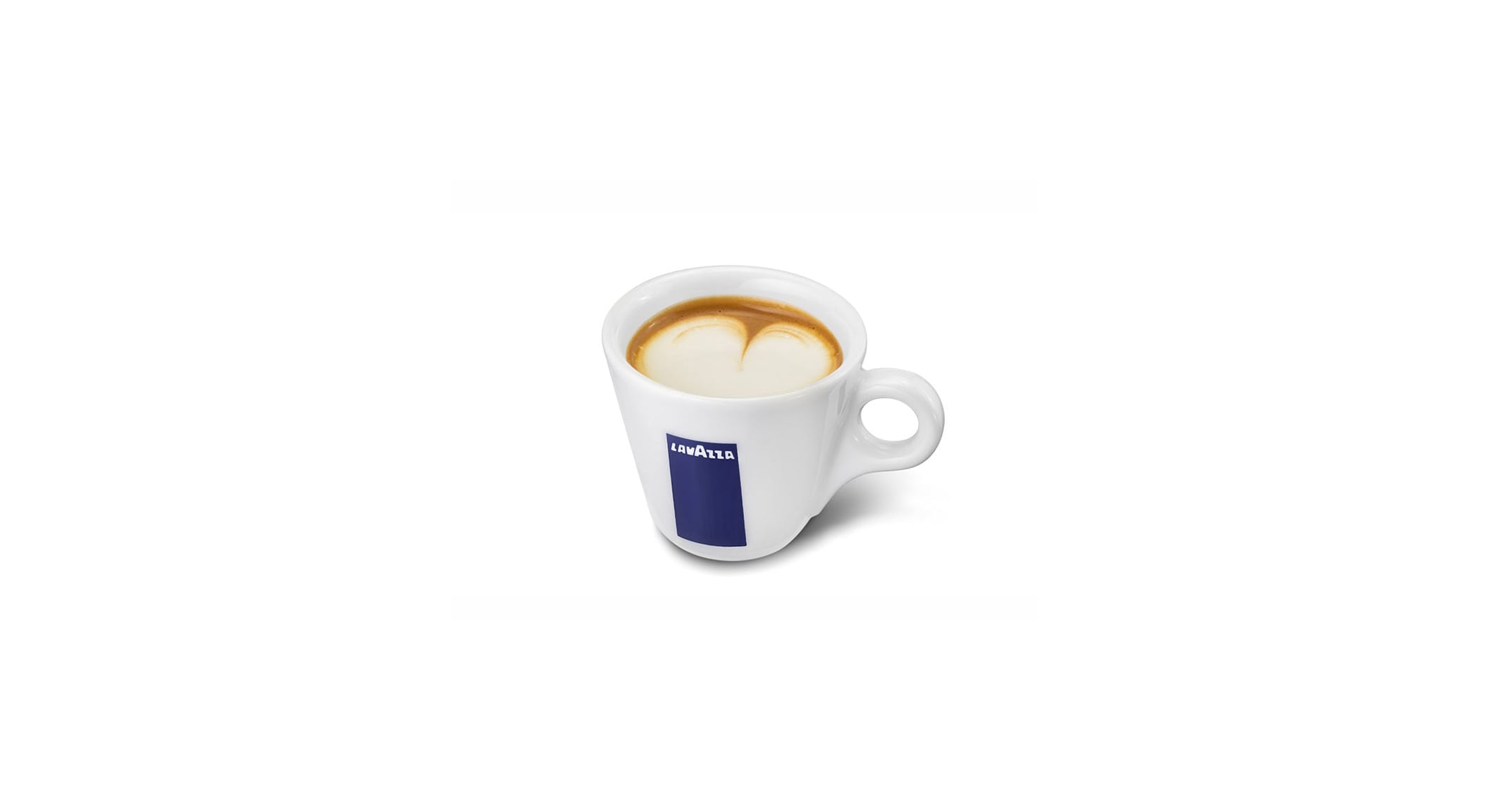
In Italy, a macchiato (short for caffè macchiato, "stained coffee") is one or two shots of espresso with a small amount of milk foam on top, usually served in a 2 to 3 oz espresso cup. The name describes exactly what happens: the espresso is "stained" or "marked" by a small amount of milk, not covered by it.
There's no steaming ritual involved in the traditional version. A barista pulls the shot, then adds a spoonful of foamed milk directly on top. The result drinks almost like straight espresso, with just enough milk to round out some of the sharper acidity.
A note on U.S. menus: the "macchiato" most Americans know from chain coffee shops, the caramel macchiato, is a different drink built on different logic. It starts with milk and a flavored syrup, has espresso poured on top, and is often finished with a drizzle of caramel: closer in structure to a flavored latte than to an Italian macchiato. If you want the traditional drink at a specialty café in the U.S., "espresso macchiato" is usually the safer order to specify. There's also a latte macchiato, a different (and also legitimate) drink where a shot of espresso is poured into a glass of steamed milk, creating visible layers rather than a stained espresso; it's far more milk-forward than the espresso macchiato described above.
What is a Flat White?
A flat white is a double espresso (traditionally made using a ristretto, a shorter, more concentrated extraction) with steamed milk poured on top, textured into a fine, glossy microfoam. It sits in a smaller cup than a latte, usually 5 to 7 oz, and the smaller milk volume relative to a latte keeps the espresso more prominent in the final flavor.
The drink's origin is genuinely disputed. Both Australia and New Zealand claim it: Sydney's Moors Espresso Bar is documented serving a "flat white" on its menu by 1985, while separate accounts trace an earlier or parallel version to Wellington cafés in the same decade. Some coffee historians point to an even earlier, unrelated use of the term in 1950s England, though that version wasn't the same espresso-based drink known today. What's not disputed is that the modern flat white, as adopted by specialty coffee, is an Antipodean invention built around the specific technique of ultra-fine microfoam.
That microfoam is the technical heart of the drink. It's created by keeping the steam wand tip just below the milk's surface only briefly, enough to introduce a small amount of air, then submerging it fully to spin and heat the milk without adding more volume. The result is a milk texture with tiny, tightly integrated bubbles rather than a separate foam layer, which is also what makes flat whites well suited to latte art despite their smaller milk volume.
How to make the perfect latte at home
A latte is built to let milk lead, with the espresso providing structure and depth rather than dominating the cup. Here's a reliable home method:
- Dose and grind. Use about 18g of finely ground coffee for a double shot, ground fine enough that extraction runs 25–30 seconds.
- Pull the shot. Extract roughly 36g / 1.2 oz of espresso directly into your serving cup, or into a separate shot glass if you prefer to pour it in after the milk.
- Steam the milk. For an 8–10 oz latte, steam 6–8 oz of milk to 150–160°F. Introduce air for the first few seconds with the steam wand tip just below the surface to build a foam layer, then submerge the tip to heat and texture the remaining milk.
- Let it settle. A short rest lets the foam and steamed milk separate slightly, which gives you more control when pouring and makes it easier to hold back the foam if you want a flatter pour.
- Pour. Pour the milk into the espresso in a steady stream, starting from a height to blend the two, then lowering the pitcher as the cup fills to build any latte art. A traditional latte finishes with a visible foam cap, roughly a half inch, on top.
- Serve immediately, while the espresso and milk are still integrated and hot.
Adjusting the ratio to taste: for a smaller, more traditional Italian-style latte (closer to 6 oz total, 1:2 ratio), use less milk and skip building a thick foam cap. For the larger, milkier American café style, stick with the higher milk volumes above.
Making a vegan version of each drink
All three of these drinks can be made with plant-based milk, though the smaller the milk volume, the more the milk's steaming behavior matters to the final result.
- Vegan Latte: the most forgiving of the three for plant milk, since the larger milk volume buffers any texture inconsistencies. Barista-formulated oat milk is the most consistent option; it steams and foams similarly to dairy and holds a stable foam cap.
- Vegan Flat white: trickier, since the drink depends on fine, stable microfoam. Barista oat milk remains the top performer here too; steam it slightly cooler (130–140°F) and more briefly than dairy to avoid a grainy or split texture.
- Vegan Macchiato: the least forgiving, since there's barely any milk to work with. A small dollop of well-foamed barista oat milk works, but almond and coconut milk tend to foam too unevenly at this small a volume to hold a clean "stain" on top of the espresso.
Common mistakes when making milk-based espresso drinks
- Confusing "more milk" with "better latte." Beyond a certain point, added milk just dilutes rather than improves; stick to the 1:3–1:5 range for a standard latte.
- Over-steaming milk for a flat white. If the milk has visible large bubbles or a separate foam cap, it's texture for a latte or cappuccino, not a flat white.
- Treating a macchiato like a mini latte. A macchiato shouldn't have steamed, poured milk; it's a spoonful of foam added directly to the espresso.
- Steaming milk too hot across the board. Milk starts to taste scalded and loses sweetness above roughly 150°F for lattes, and even lower for flat whites and vegan milk. A thermometer or a pitcher you can hold comfortably by hand (up to a point) helps keep this in check.
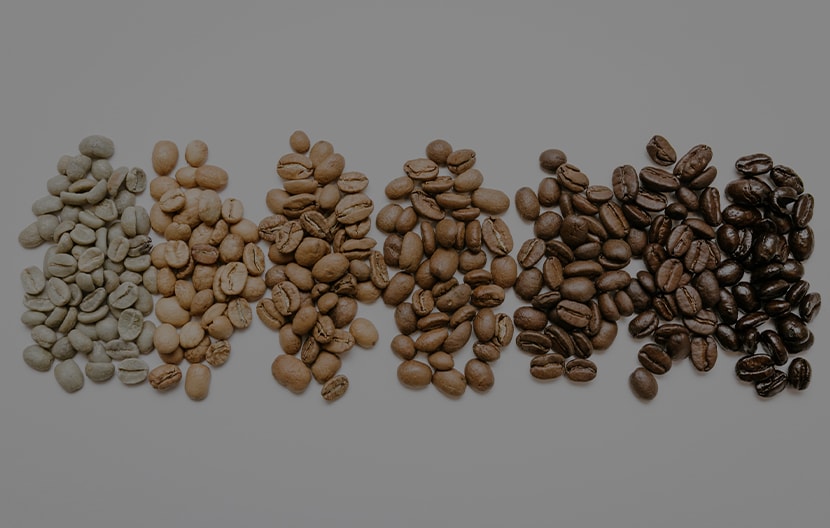
- Using a light, delicate single-origin roast for milk drinks. These shine in a macchiato, where the milk is minimal, but tend to get flattened in a latte, where the higher milk volume calls for a blend with more body to stay present in the cup.
Best Lavazza beans for Latte, Flat White & Macchiato
Because these three drinks use such different milk volumes, the ideal blend shifts depending on which one you're making.
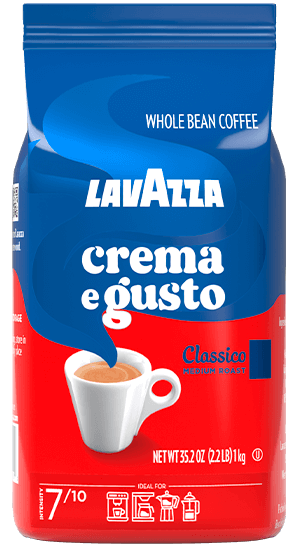
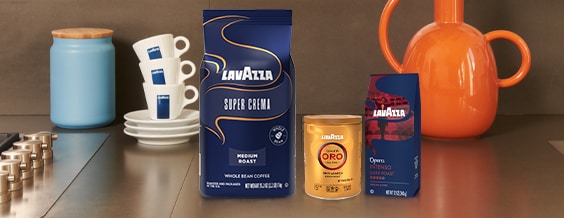
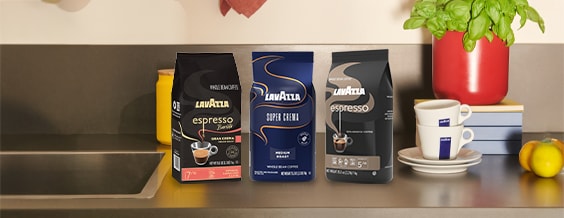
- Crema e Gusto: An Arabica/Robusta blend (intensity 7/10) with spiced, full-bodied notes, developed specifically for milk-based preparations. Its higher intensity and thick crema hold up well against a latte's larger milk volume, making it a strong first choice for everyday lattes.
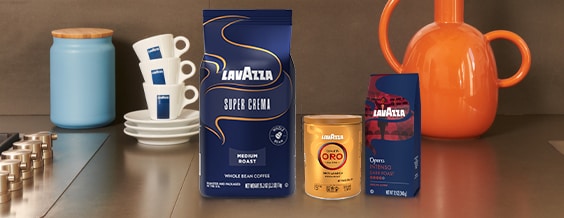
- Super Crema: A full-bodied Arabica/Robusta blend with roasted hazelnut and brown sugar aromatic notes. Balanced enough to work across all three drinks, from a macchiato where its character stays close to the surface to a latte where it holds its own against the milk.
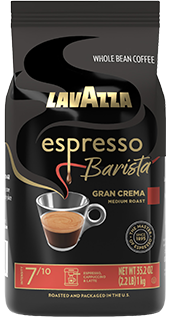
- Espresso Barista Gran Crema: An Arabica/Robusta blend with chocolatey aromatic notes and a stable, lingering crema, purpose-built to interact well with steamed milk. A good pick for flat whites specifically, since a stable crema helps support fine microfoam during the pour.
- Qualità Oro: A 100% Arabica, medium roast with a smoother, more delicate profile. Best suited to a macchiato, where the small amount of milk leaves plenty of room for a gentler espresso character to come through on its own.
As a general rule: the more milk a drink uses, the more body and intensity the espresso needs to still register once it's diluted. Save your lightest, most delicate roasts for macchiatos or straight espresso, and reach for a fuller-bodied Arabica/Robusta blend for lattes and flat whites.
FAQ
Which is sweeter: a latte, a flat white, or a macchiato?
A latte, simply because it has the highest milk volume relative to espresso, and milk's natural lactose reads as sweetness. A flat white is moderately sweet due to its smaller but still significant milk content. A traditional, Italian-style macchiato is the least sweet of the three, since there's very little milk to soften the espresso's natural bitterness and acidity.
Which has the strongest coffee flavor?
The macchiato, by a wide margin. Its 2:1 espresso-to-milk ratio leaves the espresso almost undiluted. The flat white is next, with more prominent espresso flavor than a latte despite having steamed milk, because its overall milk volume is lower. The latte has the mildest coffee flavor of the three.
Does a flat white have more caffeine than a latte?
Not necessarily. Caffeine depends on the number and type of espresso shots used, not on how much milk is added. A flat white and a latte made with the same shots (for example, both using a double) contain the same amount of caffeine; the flat white simply tastes stronger because there's less milk diluting it.
Is a cappuccino the same as a flat white?
No. A cappuccino uses roughly equal parts espresso, steamed milk, and thick foam, and is typically served in a 5 to 6 oz cup. A flat white skips the separate foam layer entirely in favor of fine microfoam integrated into the milk, giving it a smoother, less airy texture.
Why does my homemade latte taste weaker than a café latte?
Usually one of two things: too much milk relative to the espresso, or an under-extracted shot. Start by checking your ratio (aim for 1:3 to 1:4 espresso to milk) before adjusting your grind or dose.
Can I order a "flat white" and get a latte by mistake?
It depends on the café. Some independent and chain coffee shops use looser definitions, especially outside specialty coffee circles. At a specialty café, a flat white should always come in a smaller cup with less visible foam than a latte; if what arrives looks and tastes like a latte, it's worth asking how it was made.
You may also like
Try this recipe with one of these suggested blends for the ultimate Lavazza experience
Tag us on Instagram @lavazzausa with #LavazzaCoffee